Navigating today’s jewelry market means drawing a hard line between earth-mined stones, exact scientific lab-created equivalents (like Lab-Grown Diamonds, Synthetic Corundum, and Synthetic Spinel), and high-tech simulants (including Cubic Zirconia, Nano Gems, and Glass crystal). This guide breaks down their physical properties, aesthetic meanings, and empirical identification metrics so you can make informed sourcing and purchasing decisions.
Crystal Types List: The Complete Breakdown
Categorizing modern jewelry materials takes more than just looking at their sparkle. You have to look at their chemical structures and manufacturing origins. Here is a look at the most popular options available today.
Lab-Grown and Synthetic Crystals (High-Tech Equivalents)
These share the same optical, physical, and chemical properties as natural gems. The only difference is that they grow in controlled lab environments instead of inside the Earth.
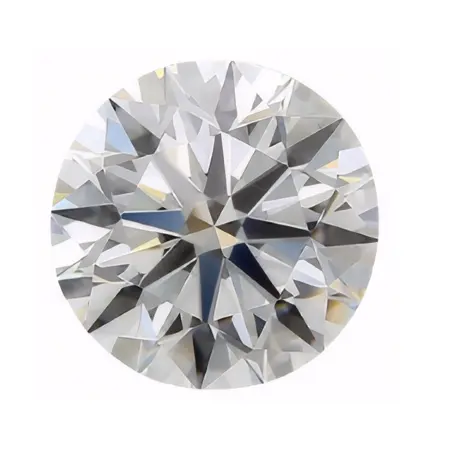
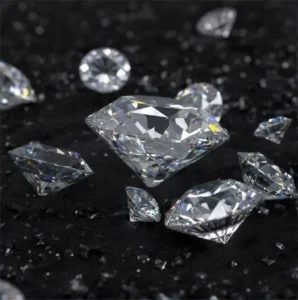
Lab-Grown Diamonds: Formed from pure carbon under extreme pressure and heat, these are 100% real diamonds. They hit a perfect 10 on the Mohs hardness scale and match the brilliance of mined diamonds perfectly.
Synthetic Corundum (Ruby & Sapphire): Made primarily using the flame-fusion (Verneuil) method, synthetic corundum is essentially aluminum oxide (Al2O3). It packs a Mohs hardness of 9, making it exceptionally tough for daily wear.
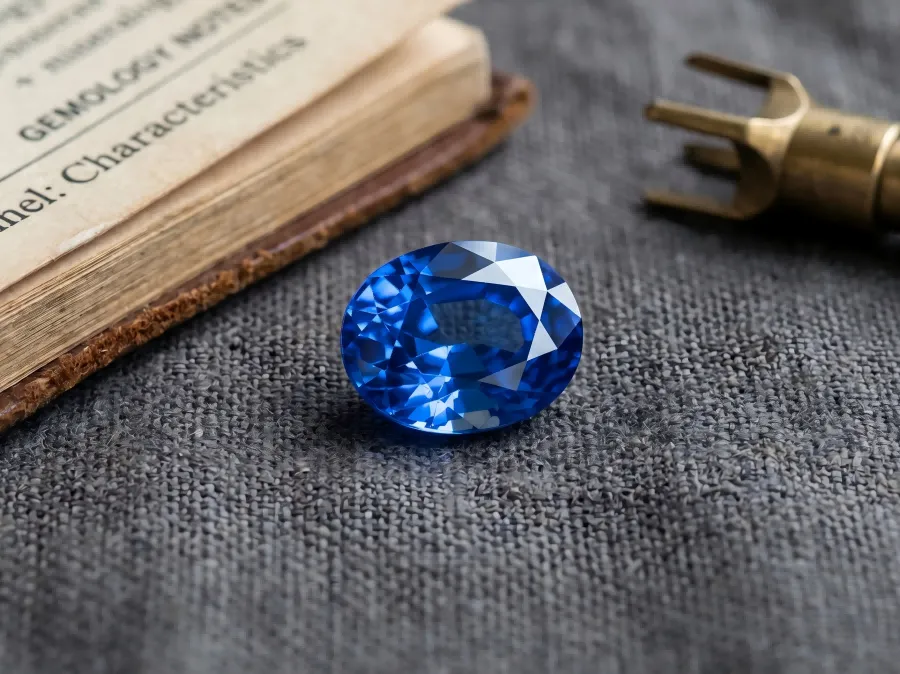
Synthetic Spinel: This magnesium-aluminum oxide forms in the cubic crystal system. Jewelers frequently use lab-created spinel to flawlessly replicate the vibrant colors of ruby, sapphire, and aquamarine without the heavy price tag.
Moissanite: Though originally found in meteorite craters, the moissanite on the market today is almost entirely lab-grown silicon carbide. It actually beats diamonds in the refractive index department, giving it incredible, fiery brilliance.
High-Quality Simulants and Advanced Composites
Simulants don’t share the chemical DNA of natural stones, but advanced engineering gives them flawless aesthetics, great durability, and accessible price points.

Cubic Zirconia (CZ): CZ is a synthesized, cubic crystalline form of zirconium dioxide (ZrO2). Sitting at 8.0 to 8.5 on the Mohs scale with a massive refractive index of 2.15 to 2.18, it serves as a dense, highly brilliant diamond stand-in.
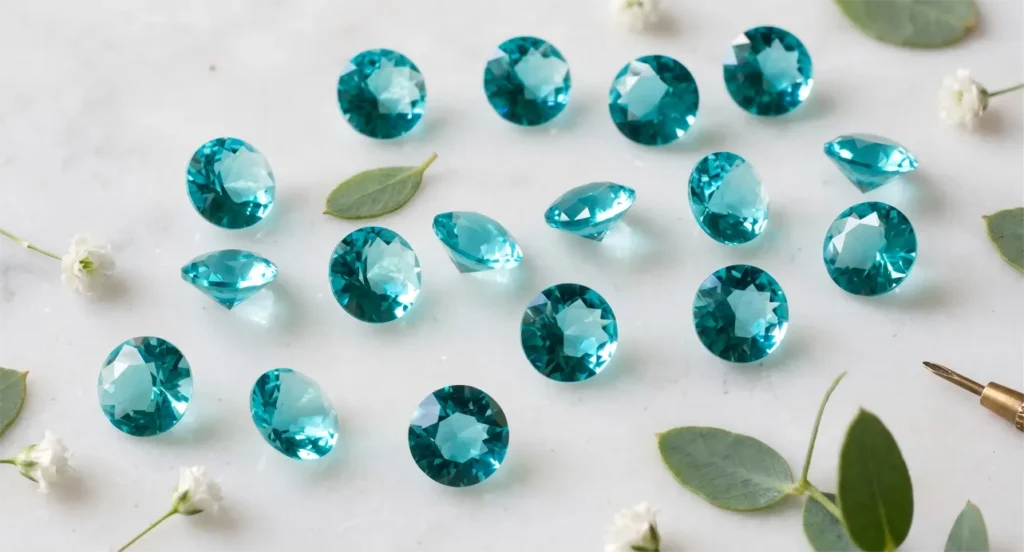
Nano Gem (Nano Crystal): This is a heat-resistant glass-ceramic hybrid. It suspends nano-sized spinel crystals inside an aluminosilicate glass matrix. Nano gems deliver perfectly consistent colors, survive extreme casting heat (up to 1700°C), and hold up well with a Mohs hardness of around 7.
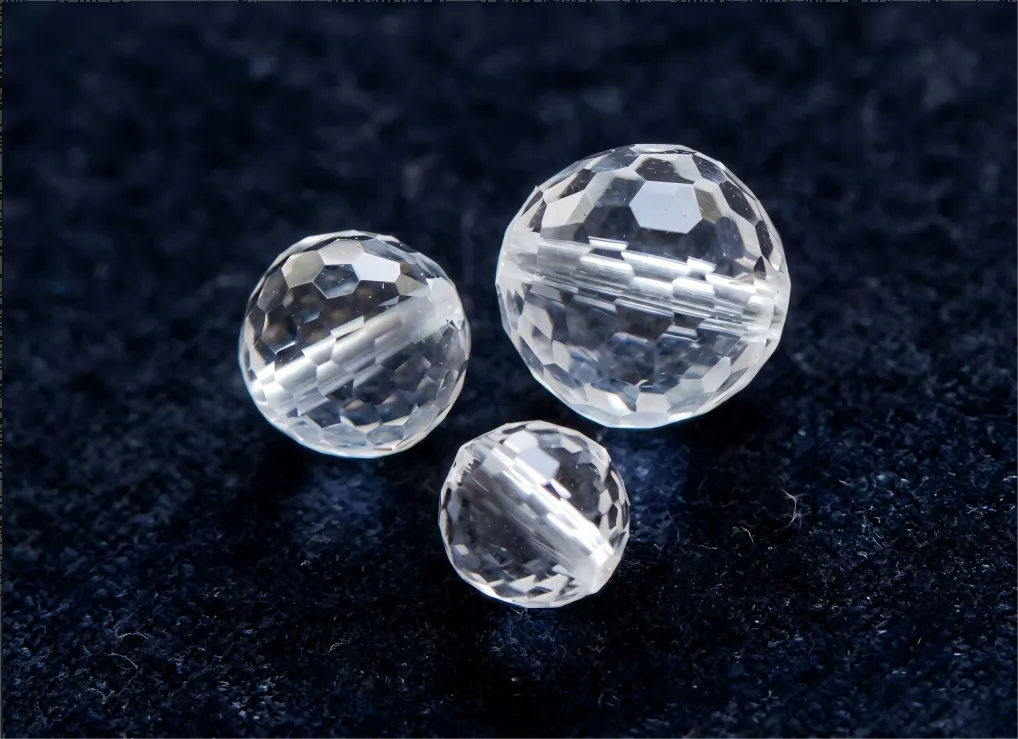
Glass Crystal: Often sold under fancy trade names in the fashion jewelry world, this is simply an amorphous solid. It lacks a periodic internal crystalline structure. Precision machine-cutting makes it highly reflective, but scientifically, it is not a crystal and scratches much more easily than natural or synthetic stones.
Natural Stones (Earth-Mined)
Earth-mined stones like Quartz, Amethyst, and Topaz take millennia of geological heat and pressure to form. They carry a lot of historical cachet, but they increasingly share shelf space with the flawless, sustainable lab equivalents we just covered.
Crystals and Meanings: What Modern Buyers Need to Know
The aesthetic intention and emotional draw of a stone rarely change just because it was grown in a lab. The meanings still tie heavily to color and historical archetypes:
- Red Stones: Universally linked to vitality, passion, and courage. People often associate deep red hues with grounding energy and confidence.
- Blue Stones: Stand for wisdom, clear communication, and emotional balance.
- Clear Stones: The ultimate symbols of purity, amplified energy, and clear intentions, which is exactly why they dominate the bridal jewelry market.
Crystal Identification Chart: Synthetics, Simulants, and Naturals
Relying on empirical data is the only way to identify these stones accurately. Below is a quick reference chart detailing the gemological properties of today’s most popular materials.
| Material | Category / Origin | Mohs Hardness | Refractive Index (RI) | Crystal System / Structure |
|---|---|---|---|---|
| Lab-Grown Diamond | Synthetic | 10 | 2.42 | Cubic (Isometric) |
| Moissanite | Synthetic | 9.25 | 2.65 - 2.69 | Hexagonal |
| Synthetic Corundum | Synthetic | 9 | 1.760 - 1.772 | Trigonal |
| Cubic Zirconia (CZ) | Simulant | 8.0 - 8.5 | 2.15 - 2.18 | Cubic |
| Synthetic Spinel | Synthetic | 8 | 1.710 - 1.740 | Cubic |
| Nano Gem | Glass-Ceramic | 6.5 - 7.2 | 1.61 - 1.64 | Nanoparticle / Amorphous Matrix |
| Natural Quartz | Natural | 7 | 1.544 - 1.553 | Trigonal |
| Glass Crystal | Simulant | 5.5 - 6.0 | 1.50 - 1.70 | Amorphous (Non-crystalline) |
The Key Takeaway: Aligning Material Specs with Brand Economics
Selecting the right crystal matrix involves more than matching visual brilliance; it directly dictates your production yield, manufacturing risk, and profit margins. For scaling jewelry brands, the choice between lab-grown synthetics, advanced simulants, and natural stones should be guided by your target pricing tier and assembly constraints:
- For Premium Lines (925 Sterling Silver & Vermeil): Leveraging Lab-Grown Diamonds or Synthetic Corundum ensures your pieces retain high-end gemological durability (Mohs 9–10) and E-E-A-T alignment without the prohibitive overhead of earth-mined stones.
- For High-Volume/High-Street Collections (Brass & Acciaio inossidabile): Deploying Zirconia cubica or thermal-resistant Nano Gems minimizes material costs while ensuring your inventory survives high-heat lost-wax casting processes without fracturing.
Build Your Next Collection with Low-Risk Prototyping
At Fine Chic, we don’t just supply bulk materials—we offer a comprehensive OEM/ODM custom service. We streamline your supply chain by offering flexible MOQs for custom 925 silver, brass, and stainless steel formulations, allowing you to test market trends without heavy capital exposure.