While laboratory-grown diamonds (LGDs) are genuine carbon crystals with identical properties to naturally mined diamonds, the 2025-2026 industry landscape has completely changed how they are graded. With institutions like HRD Antwerp exiting the commercial LGD market entirely and the Gemological Institute of America (GIA) shifting to a binary “Premium/Standard” assessment system, the International Gemological Institute (IGI) remains the primary authority providing the detailed 4Cs grading chart (D-Z color, FL-I3 clarity) for lab diamonds.
Whether you are a consumer looking for the perfect engagement ring or a jewelry brand sourcing bulk materials, understanding this new grading reality is essential for securing the best value and quality.
Why the “Standard” Chart is Splitting
If you are buying or sourcing lab diamonds in 2026, you cannot rely on old information. By 2024, laboratory-grown diamonds captured more than 45% of all engagement ring purchases in the United States. Because modern manufacturing can produce flawless, colorless lab diamonds at scale—with 85.9% of all laboratory-grown diamonds sold in the retail sector falling into the D-F colorless range by 2025—major grading labs reached a breaking point.
Applying a rarity-based geological grading system to a continuously reproducible industrial product no longer made sense to some institutions. This resulted in a massive split in how you read a lab diamond certificate today.
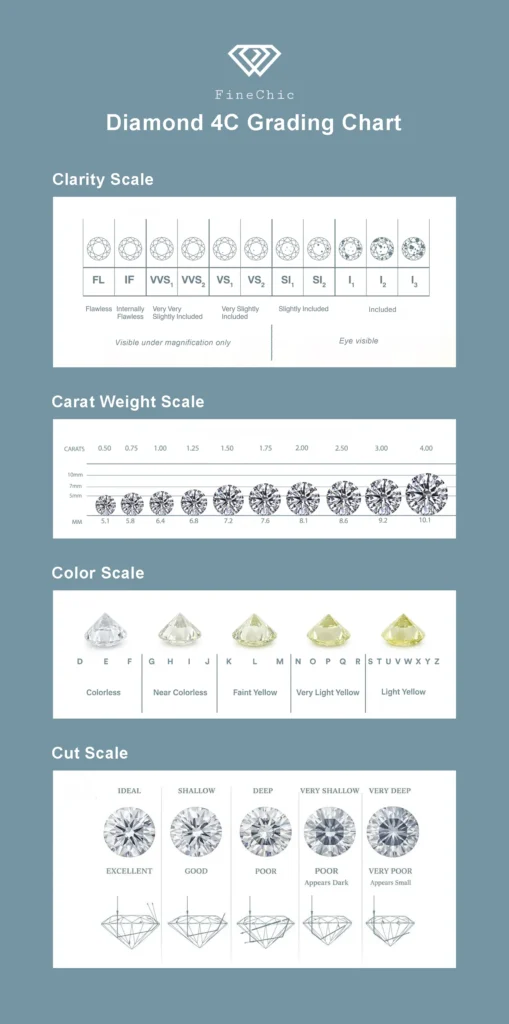
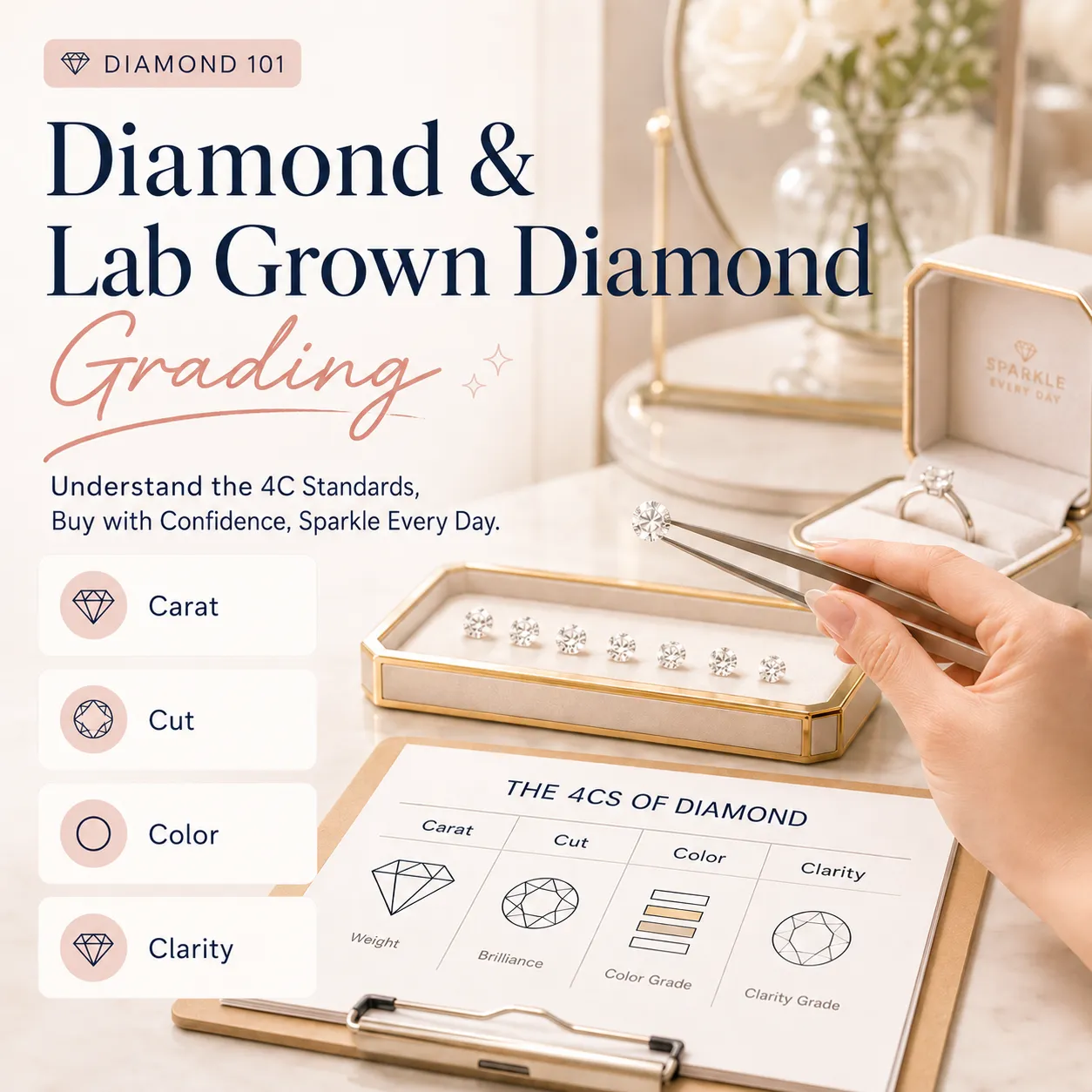
What Are the 4Cs of Diamond and Lab Diamond Grading?
The standardization of diamond quality assessment was established to bring order to a chaotic historical trade. Before the mid-20th century, the diamond trade relied on fragmented, regional descriptors. In the 1940s, the GIA introduced the first International Diamond Grading System, universally recognized today as the 4Cs: Cut, Color, Clarity, and Carat weight.
This framework was originally designed to evaluate “normal mine run” and quantify the extreme rarity of natural diamonds forged over billions of years. However, laboratory-grown diamonds are not simulants like cubic zirconia; they are genuine carbon crystals possessing essentially identical chemical, physical, and optical properties to naturally mined diamonds. Both natural and manufactured diamonds represent the only gemstones to score a perfect 10 on the Mohs scale of mineral hardness.
How Are 4Cs (Color, Clarity, Cut, and Carat) Graded?
Each dimension of the 4Cs evaluates a distinct physical or optical attribute, requiring highly trained gemologists to execute precise measurements and visual assessments.
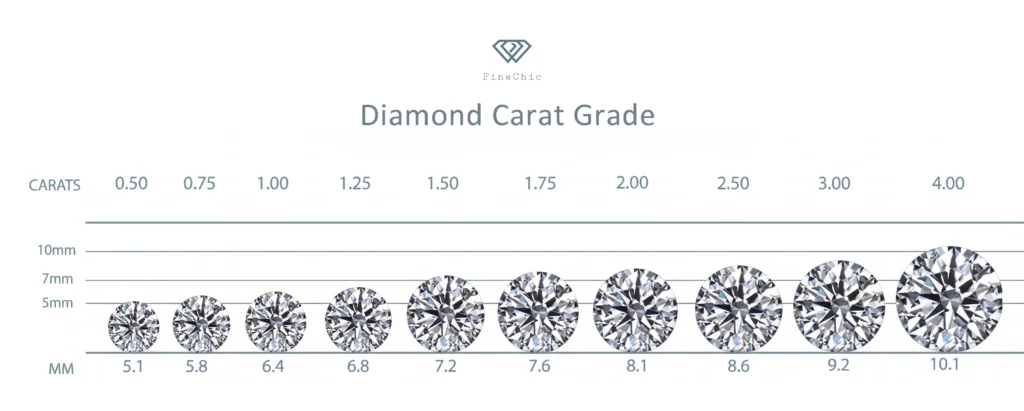
Carat (Physical Mass)
Carat weight is an objective measurement of the physical mass of the stone, calculated in metric carats, where one carat equals exactly 200 milligrams.
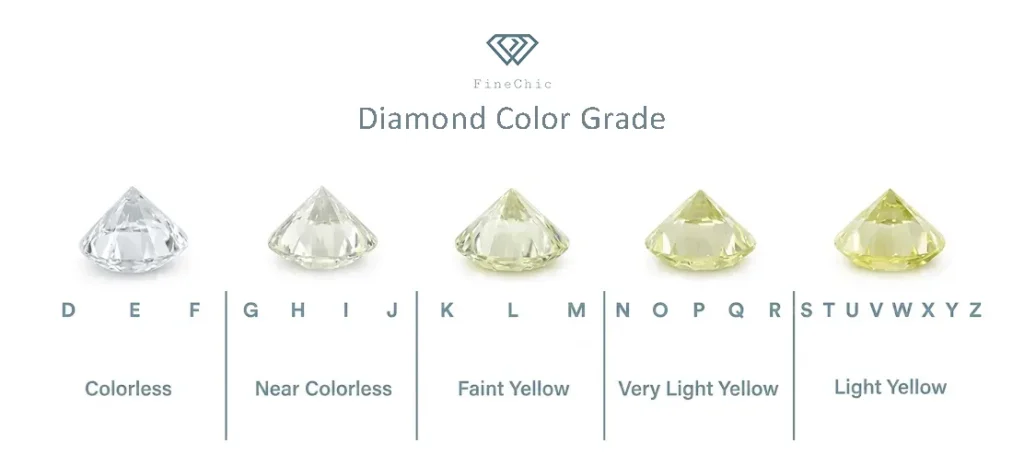
Color (Absence of Tint)
Color grading evaluates the presence of trace elements, primarily nitrogen or boron, trapped within the crystal lattice. The traditional GIA alphabetical color scale ranges from D (entirely colorless) to Z (displaying light yellow or brown hues).
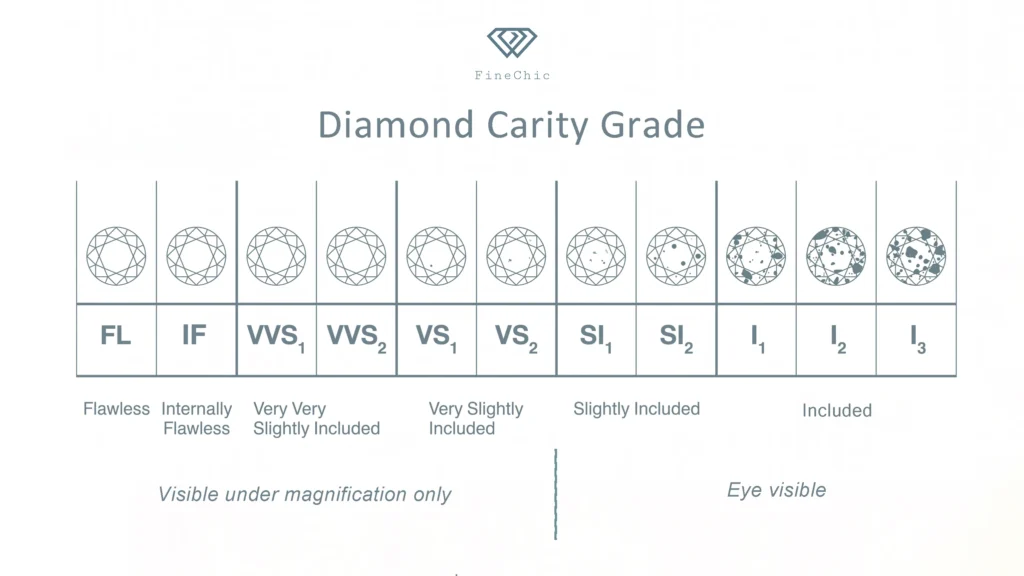
Clarity (Internal/External Characteristics)
Clarity provides an assessment of internal characteristics (inclusions) and surface defects (blemishes). Graded under standardized 10x magnification, the clarity scale ranges from Flawless (FL) to Included (I3), depending on the visibility, size, and location of these characteristics.
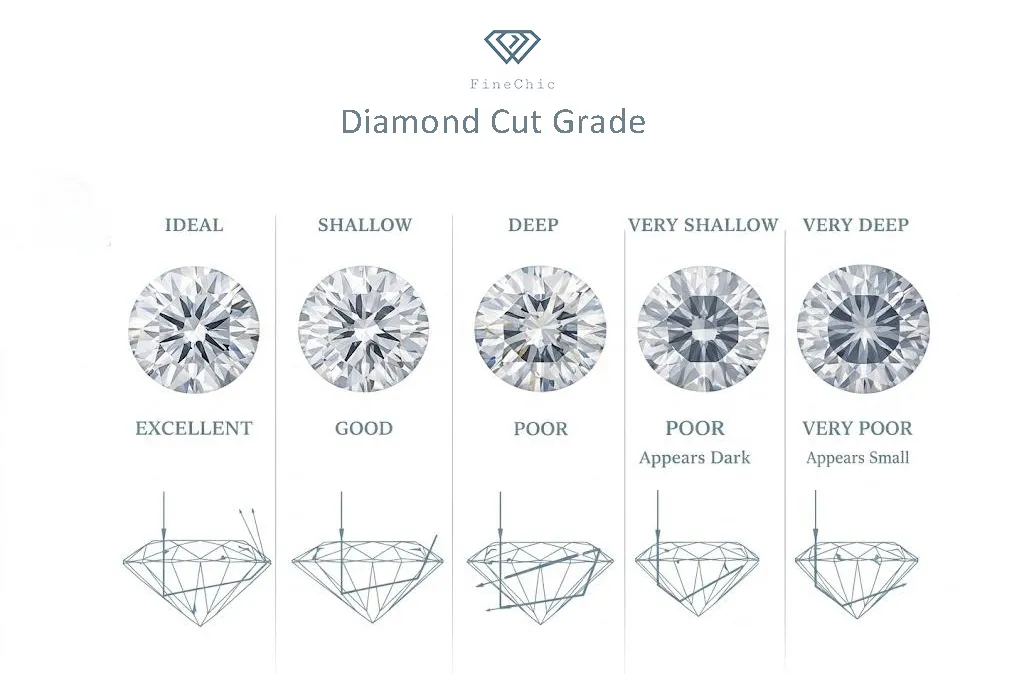
Cut (Light Performance)
Specifically applied to standard round brilliant diamonds, the cut grade evaluates the stone’s proportions, symmetry, and polish. This dictates how effectively the crystal interacts with light to produce brightness, fire, and scintillation, with traditional grades ranging from Excellent to Poor.
Natural vs. Lab Diamond Grading: What’s the Difference in 2026?
Historically, natural and lab diamonds were graded using the same metrics. However, by 2024, laboratory-grown diamonds captured an unprecedented market share as manufacturing capabilities surged and robust retail market analytics emerged.
Applying a rarity-based geological grading system to a continuously reproducible industrial product triggered a profound operational crisis among gemological laboratories. In 2026, the grading standards have officially bifurcated:
Natural Diamonds
Institutions like the GIA continue to evaluate natural stones using the traditional, highly granular 4C scale to quantify geological rarity and protect vast price variances based on minute differences.
Lab Diamonds
- GIA: The GIA completely overhauled its approach to evaluating laboratory-grown diamonds in the normal D-to-Z color range. They implemented a binary classification system: Premium (requires flawless D color, VVS2+ clarity, and Excellent cut) or Standard (encompasses E-J color and VS2+ clarity). If a lab diamond fails to meet the “Standard” threshold (e.g., K color or SI1 clarity), the GIA will refuse to issue an assessment report altogether.
- HRD: In an unprecedented move, HRD Antwerp declared that by 2026, it would completely cease the issuance of quality certificates for loose synthetic diamonds intended for commercial use.
- IGI: Stepped in to monopolize the market, providing full 4C traditional grading (D-Z, FL-I3) for lab diamonds, and explicitly identifying the specific growth process (CVD or HPHT).
| Grading Dimension | Natural Diamonds (Global Unified Standard) | Lab-Grown Diamonds (GIA New Standard) | Lab-Grown Diamonds (IGI Commercial Standard) |
|---|---|---|---|
| Màu sắc | Granular grading from D to Z | Binary classification (Premium or Standard) only, no specific color grade | Granular grading from D to Z |
| Clarity | Granular grading from FL to I3 | Threshold-based only (Premium requires VVS2+, Standard requires VS2+) | Granular grading from FL to I3 |
| Growth Characteristics & Process | Identification of natural inclusion characteristics | Growth process not specified (for colorless LGDs) | Explicitly specifies growth process (CVD or HPHT) |
| Detection Methods | Traditional 10x loupe and standard gemological instruments | Relies on advanced spectroscopy to detect silicon-vacancy defects or phosphorescence | Relies on advanced spectroscopy for internal crystal strain and inclusion analysis |
Can a Jeweler Tell If a Diamond is Lab-Grown?
Not with standard equipment. Because CVD and HPHT diamonds possess the same refractive index, hardness, and thermal conductivity as natural diamonds, traditional jeweler’s tools—such as thermal probes, diamond testers, or 10x magnification loupes—are entirely useless for identification. Identifying them requires highly advanced spectroscopic screening and detection instruments, such as the Yehuda Sherlock Holmes or De Beers SYNTHdetect.
Difference Between Lab-grown and Natural Diamonds
While both are chemically and physically identical (both scoring a perfect 10 on the Mohs hardness scale), their origins create three major distinctions:
1. Growth Marks & Inclusions
- Natural Diamonds: Forged in the Earth’s mantle over billions of years; they feature unique, random geological inclusions.
- HPHT Lab Diamonds: Grown using metal catalysts. They often contain metallic inclusions (making them magnetic) and may exhibit an unnatural glow (phosphorescence) after exposure to UV light.
- CVD Lab Diamonds: Grown in a vacuum chamber. They lack metal but typically contain dark, non-magnetic graphite pinpoints.
2. Labeling & Certification
Natural stones are valued for geological rarity, while lab stones are treated as manufactured goods. Under current standards, institutions such as the GIA mandate that lab-grown diamonds be permanently laser-inscribed with “Laboratory-Grown” on the girdle.
3. Detection Methods
Because they share the exact same refractive index and thermal conductivity, traditional jeweler’s tools (like loupes or standard diamond testers) cannot tell them apart.
When to Choose Natural Diamonds?
- Asset Allocation & Value Retention: Natural diamonds possess a legacy of rigorous grading that acts as vital financial insurance, bolstering long-term resale value and liquidity in the secondary market. They remain the ultimate benchmark of rarity and enduring value.
- Emotional Uniqueness: For buyers who value the romance of a geological anomaly forged over billions of years, natural stones offer irreplaceable, one-of-a-kind provenance.
When to Choose Lab-Grown Diamonds?
- Maximizing Size and Visual Impact: The technological efficiencies of global scaling mean consumers can secure perfectly colorless (D-F) lab diamonds at a fraction of the cost. If your priority is achieving the highest clarity and carat weight on a budget, the LGD market represents a highly efficient value optimization strategy.
- Brand Startups & Custom Manufacturing: For B2B buyers and jewelry brands, lab-grown diamonds provide an infinite supply and highly concentrated top-tier qualities. This allows manufacturers to source perfectly matched side stones for custom collections without the massive capital outlay required for natural stones.
- Verified Sustainability: For brands targeting eco-conscious consumers, sourcing stones backed by the SCS-007 Jewelry Sustainability Standard ensures verified traceability and a scientifically backed net-zero carbon footprint. By choosing Certified Sustainability Rated lab diamonds, brands can dismantle unverified marketing rhetoric with empirical ESG data.
Tóm lại
The economic valuation of lab diamonds has shifted precipitously. By early 2025, the average retail price of a 1-carat laboratory-grown diamond had plummeted to $1,000 or less—a stunning 72.8% price discount compared to natural equivalents. When sourcing stones for a collection, paper grades aren’t enough. At Sang trọng tinh tế, our factory-level quality control overrides basic grading. We implement a secondary process to filter out stones with metallic flux or poor light performance, ensuring your đồ trang sức đá quý tùy chỉnh maintains pristine, matched brilliance across every single piece.