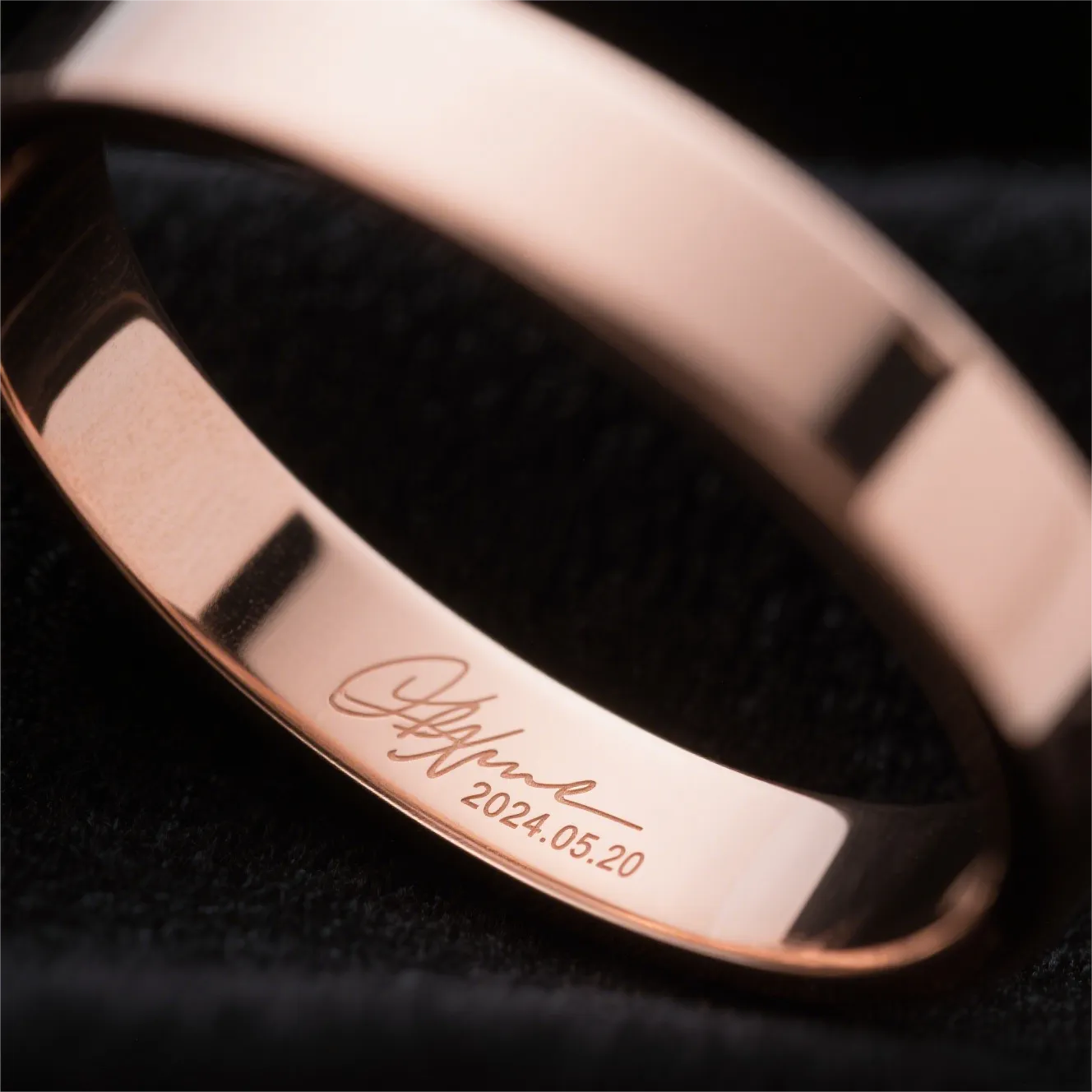
A tiny mark inside a ring or on a necklace clasp can raise useful questions: what metal is described, who submitted the piece for testing, and which marking system applies? Some marks are official hallmarks; others are material descriptions or business logos. Reading them carefully begins with telling those categories apart.
What is Jewelry Hallmark?
An official hallmark records an independent assessment of precious-metal fineness under a particular hallmarking system. A stamped number, maker’s logo or steel abbreviation is not automatically an official hallmark. Read the complete group of marks and identify the relevant national system.
Why Hallmarks Matter?
A hallmark is useful when its origin and scope are understood. Read the marks together rather than treating any small engraving as a general quality guarantee:
- Purity Verification
An official hallmark records the assessed precious-metal fineness within the applicable system. - Sponsor Identification
In a UK hallmark, the sponsor’s mark identifies the person or business that submitted the article, not necessarily its manufacturer or country of manufacture. - Defined Scope
A hallmark is not a certificate of workmanship or a guarantee of every product characteristic.
Jewelry Marks Meaning
Jewelry marks must be read within the relevant national system. The examples below include fineness descriptions and other markings; not every marking is an official assay-office hallmark.
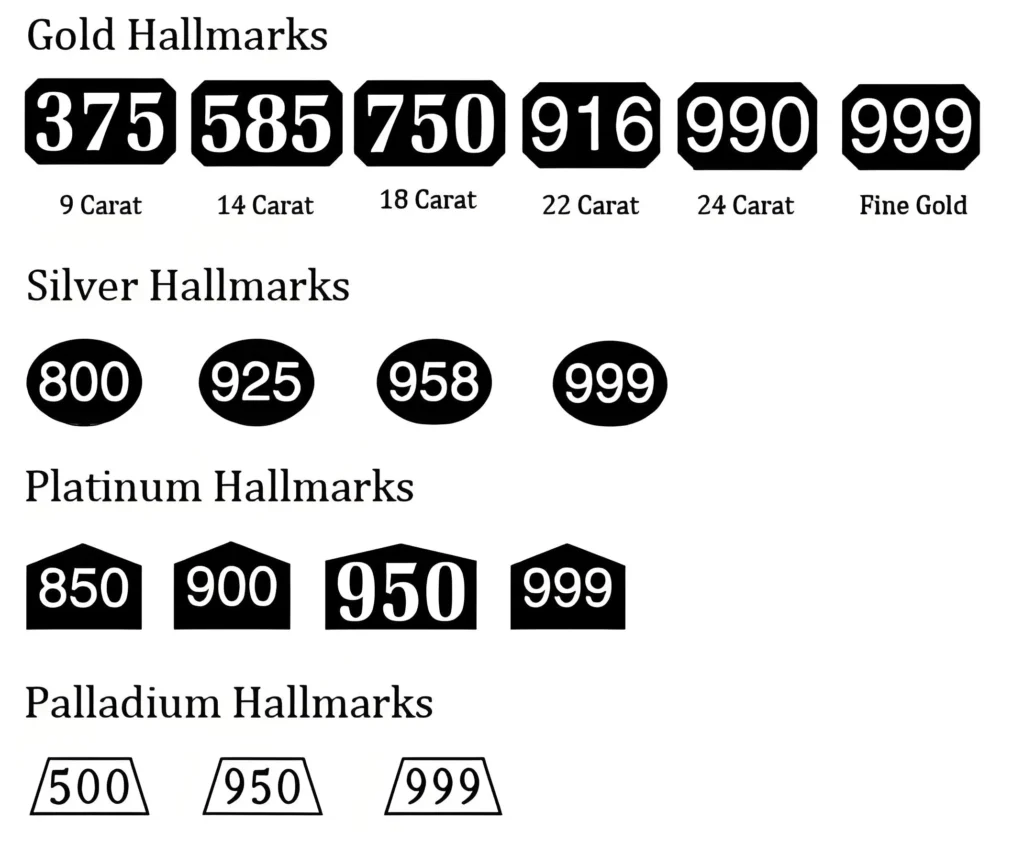
Purity Marks
Indicate metal composition using parts per thousand or karat systems:
Gold
Karat expresses gold content in twenty-four parts: 14/24 is approximately 58.3%. A fineness number of 585 means 585 parts per thousand, or 58.5%. These are related descriptions, not mathematically identical numbers. A number alone does not prove the composition or constitute a complete official hallmark.
• 999 describes a gold fineness of 999 parts per thousand, or 99.9%.
•750 (18K gold: 75% pure)
• 585 describes 58.5% gold and is commonly associated with the 14K designation.
Silver
•S925 (Sterling silver: 92.5% pure)
• S999 describes a claimed silver fineness of 999 parts per thousand, or 99.9%; it is not proof of independent testing.
Platinum
• Pt950 describes 950 parts platinum per thousand, or 95% platinum.
• Pt900 describes 900 parts platinum per thousand, or 90% platinum.
• UK platinum hallmarking standards include 850, 900, 950 and 999. Do not treat Pt750 as a universal platinum hallmark or a sign of high-end quality.
Stainless Steel
S.S. is a material abbreviation, not an official precious-metal hallmark. The abbreviation alone does not establish the steel grade or verify its composition.
• 304 and SS304 describe a claimed stainless-steel grade. Confirm the grade through the product specification and supporting documentation.
• 316L and S316L also describe a claimed steel grade; the engraving alone does not verify composition or performance.
Maker’s Mark
A maker’s mark may help identify a business, but attribution requires a reliable register or other evidence. In the UK, the registered sponsor may be the manufacturer, importer or another person who submitted the item.
• Initials alone are not enough: compare their shape, surrounding outline and associated marks with a reliable register.
• Do not assign a mark such as G585 to a particular factory without documentary evidence; the number may relate to a fineness description.
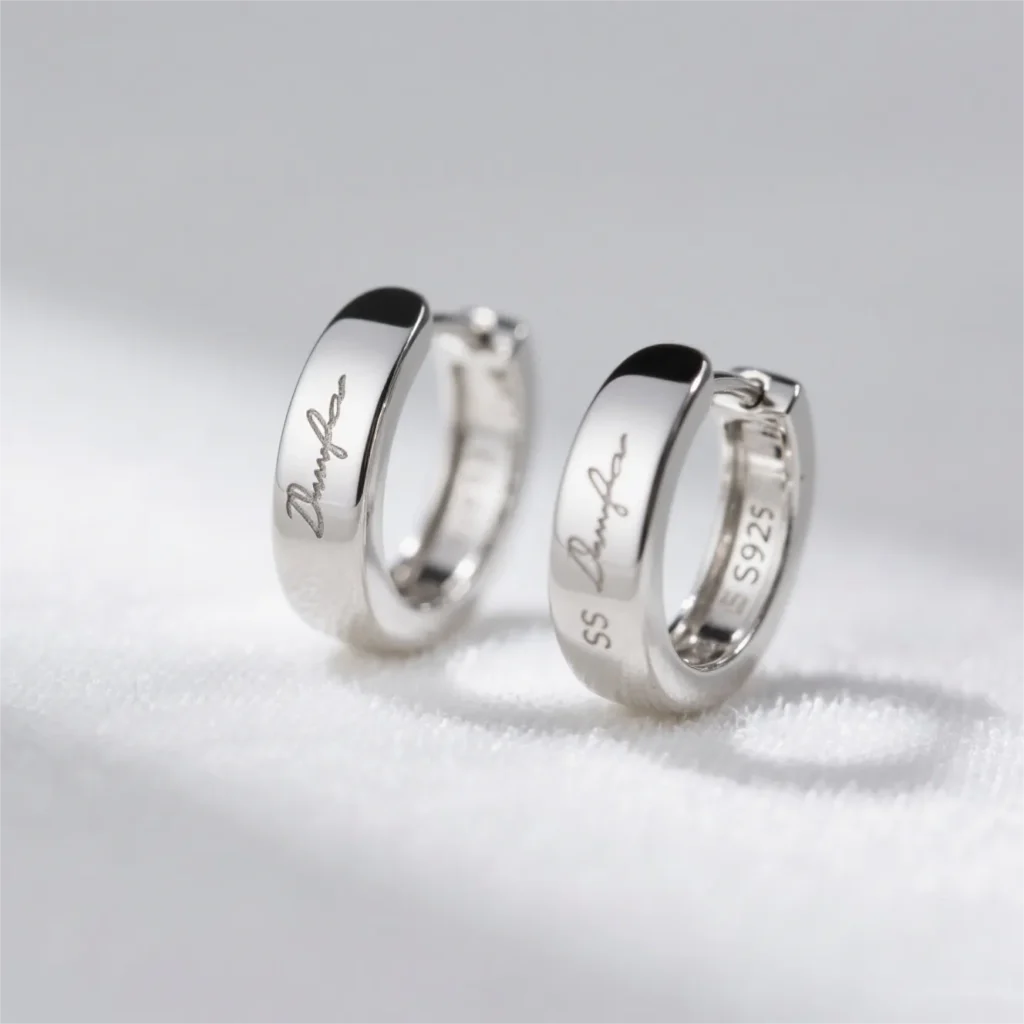
Other Jewelry Markings
Other markings may include logos, serial numbers, patent references and country indications. Their meaning needs to be checked against reliable records. A serial number does not by itself prove exclusivity, and a logo does not establish authenticity without supporting evidence.
6 Hallmark Rules for Wholesalers
- For UK hallmarks, identify the sponsor’s mark, fineness mark and assay office mark. Do not apply this three-mark format as a universal rule for every country.
- Check regional requirements: 925 describes 925 parts of silver per thousand, while hallmarking requirements depend on the market and article.
- Read date letters in context: the UK date letter is optional and indicates the year of hallmarking, not necessarily the year of manufacture.
- Interpret coating marks accurately: GP commonly denotes gold plating. It is not, by itself, evidence of a counterfeit or a measure of workmanship. Confirm the base metal and coating specification.
- Check certification claims separately: verify the named organization, certificate holder, validity and scope. A logo on its own is not proof of certification.
- Educate Your Team: Train buyers to identify anomalies, such as mismatched karat stamps.
Does Jewelry Have to Be Stamped?
Requirements vary by country, metal and article. In the UK, compulsory hallmarking is subject to exemptions, including specified weight thresholds. A simple purity stamp is not a substitute where an official hallmark is required. Check the current rules for the market in which the item will be sold.
The Takeaway
Read jewelry marks as evidence with a defined scope. An official hallmark concerns precious-metal fineness; it does not, by itself, certify the gemstones, workmanship, wear life or resale value. Combine the marks with product specifications and reliable documentation when assessing a piece.
References: UK hallmarking guidance and Sheffield Assay Office mark identification.