Laboratory-grown diamonds are diamonds, rather than imitations such as cubic zirconia. However, laboratory report formats are not interchangeable. Since October 1, 2025, GIA has used an overall Premium or Standard quality assessment for eligible laboratory-grown diamonds, while IGI continues to report the 4Cs. Check the issuing laboratory, report date and service before comparing two stones.
Whether you are a consumer looking for the perfect engagement ring or a jewelry brand sourcing bulk materials, understanding this new grading reality is essential for securing the best value and quality.
Why the “Standard” Chart is Splitting
When comparing laboratory-grown diamonds, start with the report itself rather than a market-share statistic. Confirm that it identifies laboratory-grown origin, then read the quality description, measurements and any treatment or growth-method comments. Similar-looking report layouts do not necessarily describe quality in the same way.
GIA and IGI have published different approaches to laboratory-grown diamond reporting. This is a difference in reporting policy; it does not establish that one laboratory has a monopoly or that a quality report guarantees resale value.
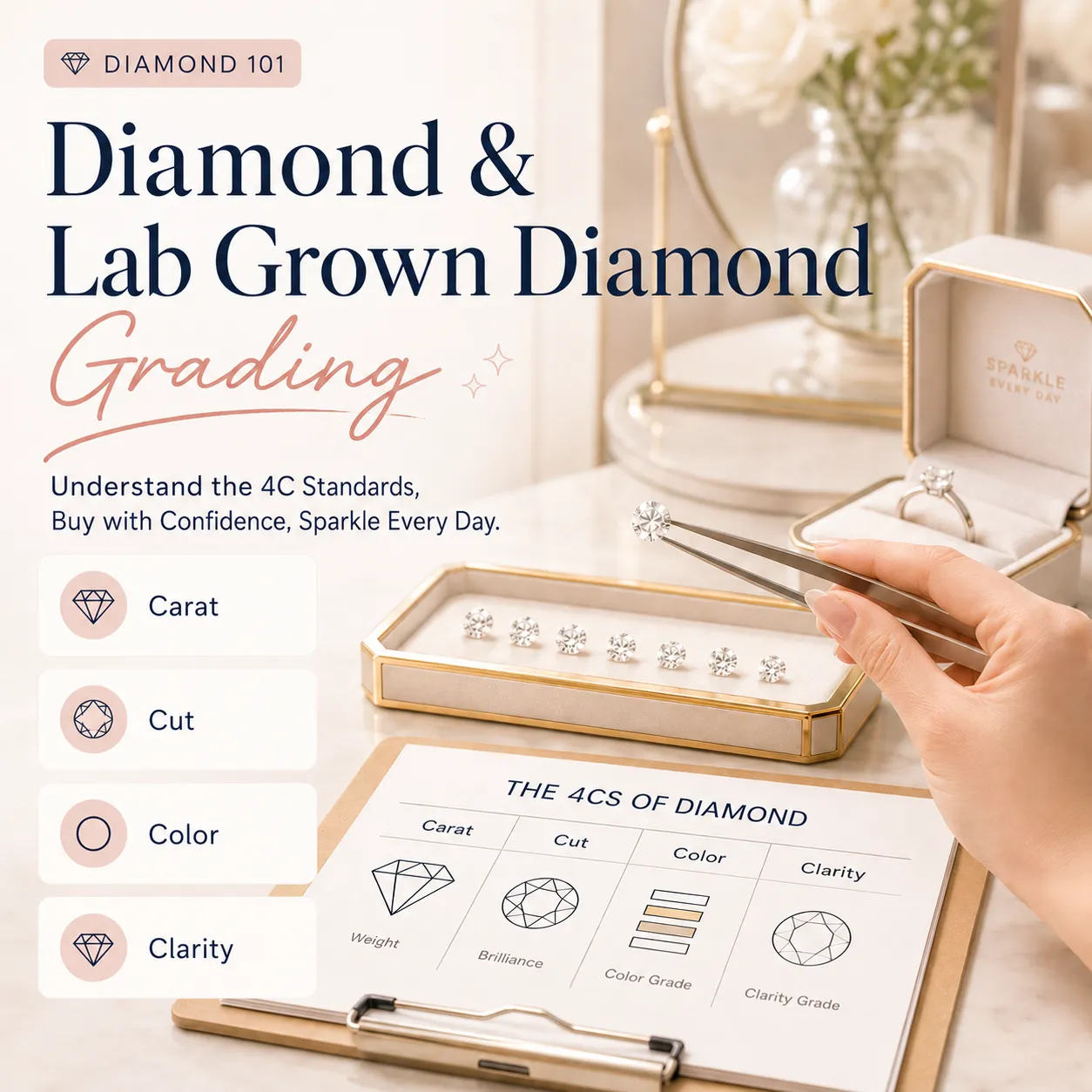
What Are the 4Cs of Diamond and Lab Diamond Grading?
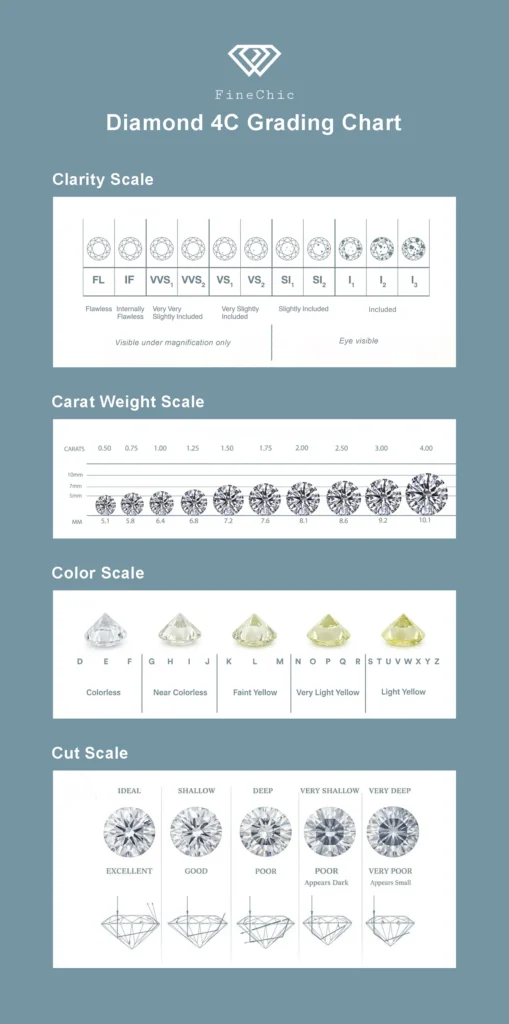
GIA introduced its International Diamond Grading System in 1953. The 4Cs describe color, clarity, cut and carat weight, providing a shared vocabulary for discussing diamond quality. Always distinguish the general 4Cs framework from the specific service and terminology used on a particular laboratory report.
Natural and laboratory-grown diamonds have essentially the same chemical composition and key physical properties. Both have Mohs hardness 10, which describes scratch resistance rather than resistance to chipping. Laboratory-grown diamonds are different from diamond simulants such as cubic zirconia.
How Are 4Cs (Color, Clarity, Cut, and Carat) Graded?
Each dimension of the 4Cs evaluates a distinct physical or optical attribute, requiring highly trained gemologists to execute precise measurements and visual assessments.
Carat (Physical Mass)
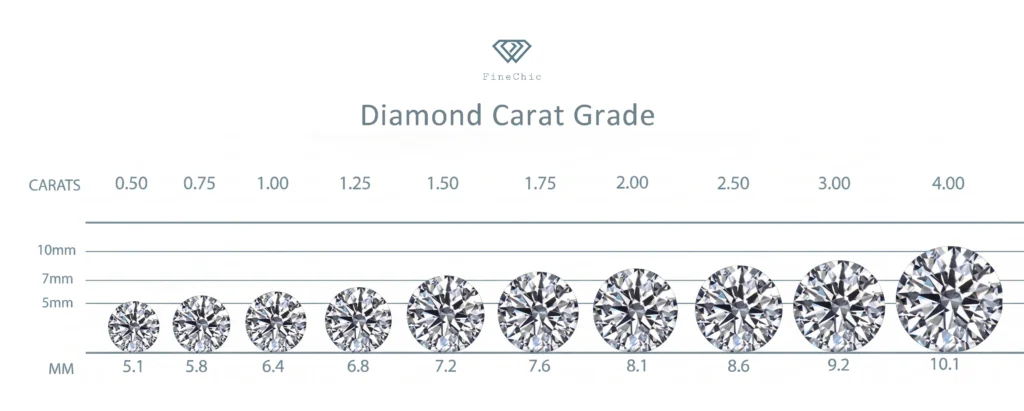
Carat weight is an objective measurement of the physical mass of the stone, calculated in metric carats, where one carat equals exactly 200 milligrams.
Color (Absence of Tint)
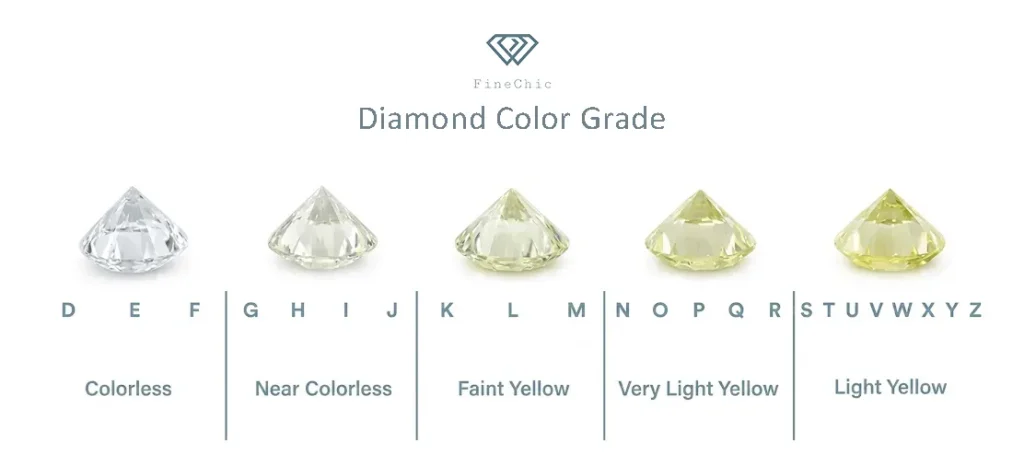
For diamonds in the normal color range, color grading compares the visible degree of color under controlled conditions. The GIA D-to-Z scale runs from colorless to light yellow or brown. Fancy-color diamonds use a different assessment; the color grade is not a direct measurement of a particular trace element.
Clarity (Internal/External Characteristics)
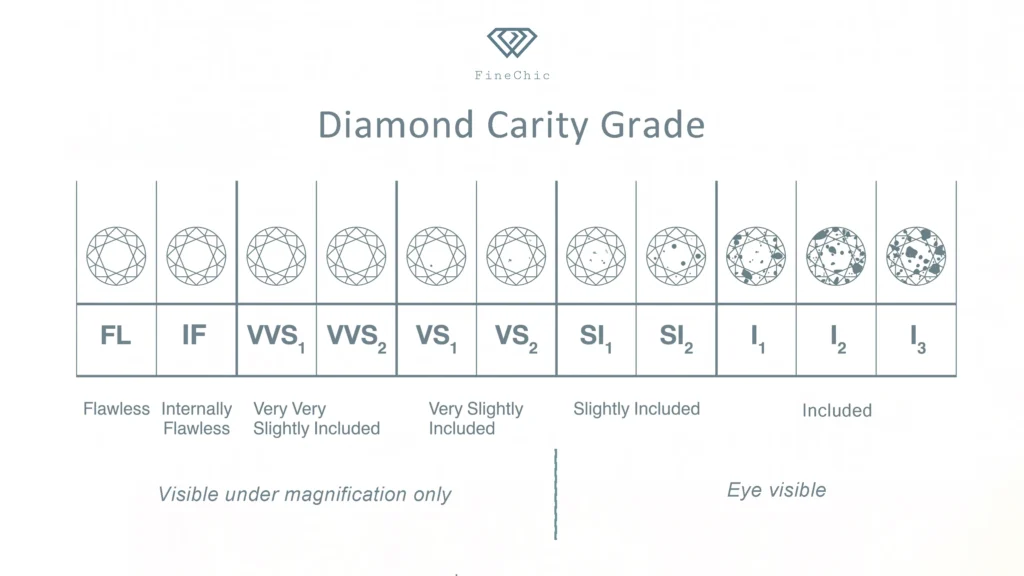
Clarity provides an assessment of internal characteristics (inclusions) and surface defects (blemishes). Graded under standardized 10x magnification, the clarity scale ranges from Flawless (FL) to Included (I3), depending on the visibility, size, and location of these characteristics.
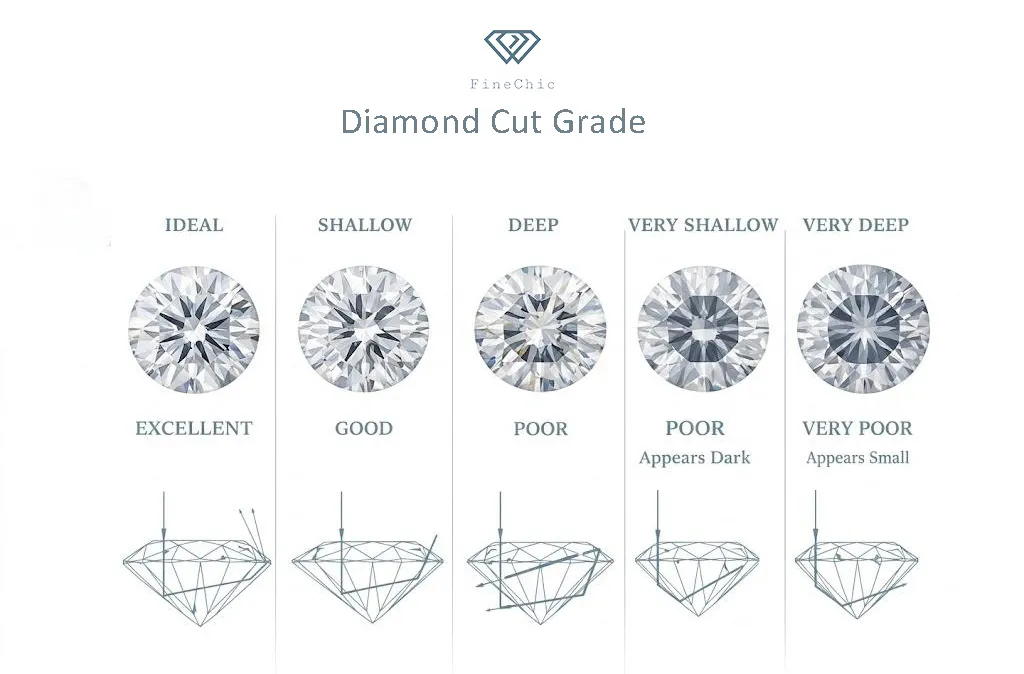
Cut (Light Performance)
GIA assigns an overall cut grade from Excellent to Poor to eligible standard round brilliant diamonds in the D-to-Z color range. Other shapes and laboratory services may use different assessments. Do not confuse a shape name, a polish grade or a symmetry grade with an overall cut grade.
Natural vs. Lab Diamond Grading: What’s the Difference in 2026?
Some laboratories use individual 4C grades for both natural and laboratory-grown diamonds, while others use a different format for laboratory-grown stones. Origin and quality are separate questions: first establish what the stone is, then compare the information provided by its report.
The examples below describe laboratory reporting policies, not a universal split across the entire industry. Check the current service offered by the issuing laboratory and the date of the document.
Natural Diamonds
A natural-diamond grading report describes assessed quality characteristics. It does not establish a selling price or promise future value. Compare the actual results and the report service rather than relying on the laboratory name alone.
Lab Diamonds
- GIA: Its Laboratory-Grown Diamond Quality Assessment, introduced on October 1, 2025, uses Premium or Standard overall categories based on color, clarity and finish criteria, with cut assessed where applicable. Stones outside the published criteria do not receive this assessment. Read the current GIA criteria and the actual report; these categories are not a one-to-one replacement for individual 4C grades.
- Other laboratories: Before ordering a report, confirm directly with the laboratory whether it currently accepts your stone type and which identification or grading service it provides. Do not assume that historical service offerings remain available.
- IGI: IGI reaffirmed on July 17, 2025 that it would continue 4Cs grading for both natural and laboratory-grown diamonds. Its laboratory-grown diamond reports identify origin and describe quality; review the particular report for growth-method and treatment comments rather than assuming that every report contains identical detail.
On small screens, swipe the table sideways to read all four columns.
| Comparison point | Natural-diamond report | GIA laboratory-grown assessment | IGI laboratory-grown report |
|---|---|---|---|
| Quality description | Individual 4C results depend on the laboratory and report service. | Premium or Standard overall category; consult the published criteria. | Individual 4C results; check the report for the applicable cut assessment. |
| Origin and growth | Natural origin should be supported by laboratory identification. | Laboratory-grown origin is identified. | Laboratory-grown origin is identified; read growth and treatment comments. |
| What to verify | Match the report number, measurements and any inscription to the stone. | Match the assessment number and inscription to the stone. | Match the report number, measurements and any inscription to the stone. |
| Important limit | A grading report is not a guarantee of resale value. | Premium and Standard do not map directly to every individual 4C grade. | A report does not replace inspection of the stone and finished setting. |
Can a Jeweler Tell If a Diamond is Lab-Grown?
A loupe or conventional thermal diamond tester alone cannot reliably establish natural versus laboratory-grown origin. A trained gemologist may observe useful clues, but suitable screening instruments and, where needed, laboratory testing are required to resolve origin. A screening referral is not itself a final identification.
Difference Between Lab-grown and Natural Diamonds
Natural and laboratory-grown diamonds can look alike, but their growth histories can leave different features. The following points explain why origin identification requires more than visual similarity:
1. Growth Marks & Inclusions
- Natural diamonds: Formed through geological processes, they can contain inclusions and growth features. The presence or absence of a visible inclusion alone does not prove natural origin.
- HPHT laboratory-grown diamonds: Some contain metallic flux inclusions or show distinctive luminescence. These features vary; not every HPHT diamond is visibly included, magnetic or identifiable with a simple visual test.
- CVD laboratory-grown diamonds: Growth features, inclusions and treatment history can vary. Specialist examination may be needed, and a single feature such as a dark pinpoint is not a reliable stand-alone origin test.
2. Labeling & Certification
For GIA laboratory-grown quality assessments, the girdle inscription includes Laboratory-Grown and the assessment number. Inscription practices depend on the service and the stone. Check the report and verify the inscription where present; wording alone is not a substitute for matching the document to the stone.
3. Detection Methods
Because they share the exact same refractive index and thermal conductivity, traditional jeweler’s tools (like loupes or standard diamond testers) cannot tell them apart.
When to Choose Natural Diamonds?
- Resale expectations: Choose a natural diamond for the qualities and origin you value, not on the assumption that a grading report guarantees liquidity or a future resale price. Treat any buy-back promise as a separate written agreement with the seller.
- Emotional Uniqueness: For buyers who value the romance of a geological anomaly forged over billions of years, natural stones offer irreplaceable, one-of-a-kind provenance.
When to Choose Lab-Grown Diamonds?
- Size and budget: Compare current quotations for stones with similar measurements and documented quality. A laboratory-grown stone may offer a different size-and-price balance, but origin alone does not guarantee colorlessness, clarity, attractive cutting or a fixed discount.
- Brand Startups & Custom Manufacturing: For B2B buyers and jewelry brands, confirm available sizes, matching tolerances, quantities and replenishment before ordering. Laboratory-grown origin does not guarantee unlimited stock or perfectly matched side stones.
- Environmental claims: Laboratory-grown origin alone does not establish a net-zero footprint. Ask for evidence specific to the producer, stone and claim. SCS announced that its SCS-007 program retired on September 1, 2026; existing company certifications may continue until their stated expiry, and individual diamond certificates remain accessible. Check the scope and validity of any certificate rather than treating a scheme name as a blanket environmental guarantee.
The Key Takeaway
When sourcing stones for a collection, compare current quotations and the exact report details. Historical averages do not establish the price of a particular stone. At Fine Chic, we coordinate stone selection, sample review and the agreed inspection requirements with the relevant production partner. Confirm matching tolerances, report details and any additional testing for your custom gemstone jewelry project before the production order.