
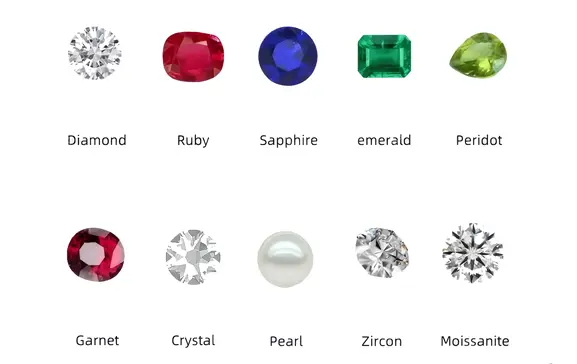
Birthstone jewelry connects a gemstone with a month, a personal story and the pleasure of giving a meaningful gift. A pendant chosen for a birthday or a ring combining family birthstones can carry a significance beyond its color. For custom gemstone jewelry, that connection offers a starting point for design. Understanding the tradition also helps explain why stones associated with different months can vary so widely in appearance, availability and price.
What Is Birthstone?
A birthstone is a gem associated with a month of birth. These associations are part of cultural tradition, storytelling and personal expression, rather than evidence that a stone brings good fortune or has special powers. Today, a birthstone can provide a familiar color or a meaningful detail in a pendant, ring or pair of earrings. Different traditions may associate different stones with the same month.
The modern American birthstone list was standardized in 1912 and has been updated over time. Tanzanite was added as a December birthstone in 2002, offering another blue-to-violet option alongside the month’s established gemstones. The monthly reference below follows the American Gem Society list, so readers can see which tradition is being used rather than treating every alternative list as identical.
| Month | Birthstones |
|---|---|
| January | Garnet |
| February | Amethyst |
| March | Aquamarine, Bloodstone |
| April | Diamond |
| May | Emerald |
| June | Pearl, Alexandrite, Moonstone |
| July | Ruby |
| August | Peridot, Sardonyx, Spinel |
| September | Sapphire |
| October | Opal, Tourmaline |
| November | Topaz, Citrine |
| December | Tanzanite, Turquoise, Zircon |
Most Valuable Birthstone: Why Are Some Birthstones So Expensive?
Rarity, Quality and the Individual Stone
Rarity can influence the appeal and price of a gemstone, but a birthstone name is not a quality grade. Alexandrite illustrates the difference: attractive color change, clarity, cut and size all matter, and fine examples are not interchangeable with every stone carrying the same name. Its sources include Russia, Brazil and Sri Lanka; origin alone does not establish the quality of an individual gem. A small stone with strong color change may be more appealing than a larger, less lively example. GIA explains these distinctions in its alexandrite quality guide.
Color Change and Vivid Hues
Alexandrite can look green to bluish green in daylight and red to purplish red under incandescent light. The strength of that change varies, making the experience of viewing the actual stone part of its attraction. Tourmaline offers a different kind of color story. The vivid blues and greens associated with Paraíba-type material are related to trace elements, including copper, rather than a literal glow or a fusion process. Color, clarity, cut and size affect the appeal of each stone; a dramatic photograph is not a universal price guide. See GIA’s tourmaline quality factors for further detail.
Beyond Auction Headlines: Personal Meaning and Value
A remarkable gemstone at auction can attract attention, but a single sale describes one object in a particular setting. It is not a standard price for every stone of that variety, nor evidence that a birthstone collection will rise in value. For everyday jewelry, the more useful story is how the stone looks, why its color or month matters to the wearer, and how the design protects it during use. Choose a birthstone piece for its craftsmanship, identity and personal meaning. Treat claims about investment returns, dramatic demand increases or record prices separately, with a traceable source and the details of the specific item.