In the evolving landscape of jewelry manufacturing, surface finishing is pivotal in balancing aesthetics with durability. Among emerging technologies, electrophoretic coating (E-coating) has become a cutting-edge solution for protecting delicate jewelry designs. This article explores the science, advantages, and applications of E-coating in jewelry production while contrasting it with traditional methods like enameling, PVD, and electroplating.
What is E-Coating on Jewelry?
E-coating, or electrophoretic coating, deposits a resin-based film on a conductive metal surface using an electric field. It is a surface finish, not a change to the underlying metal. The selected coating may be clear or colored, and its preparation and curing requirements depend on the product used. For jewelry, the useful question is not simply whether a piece is e-coated, but which coating system has been applied, what it is intended to protect against and how the finished piece should be cared for.
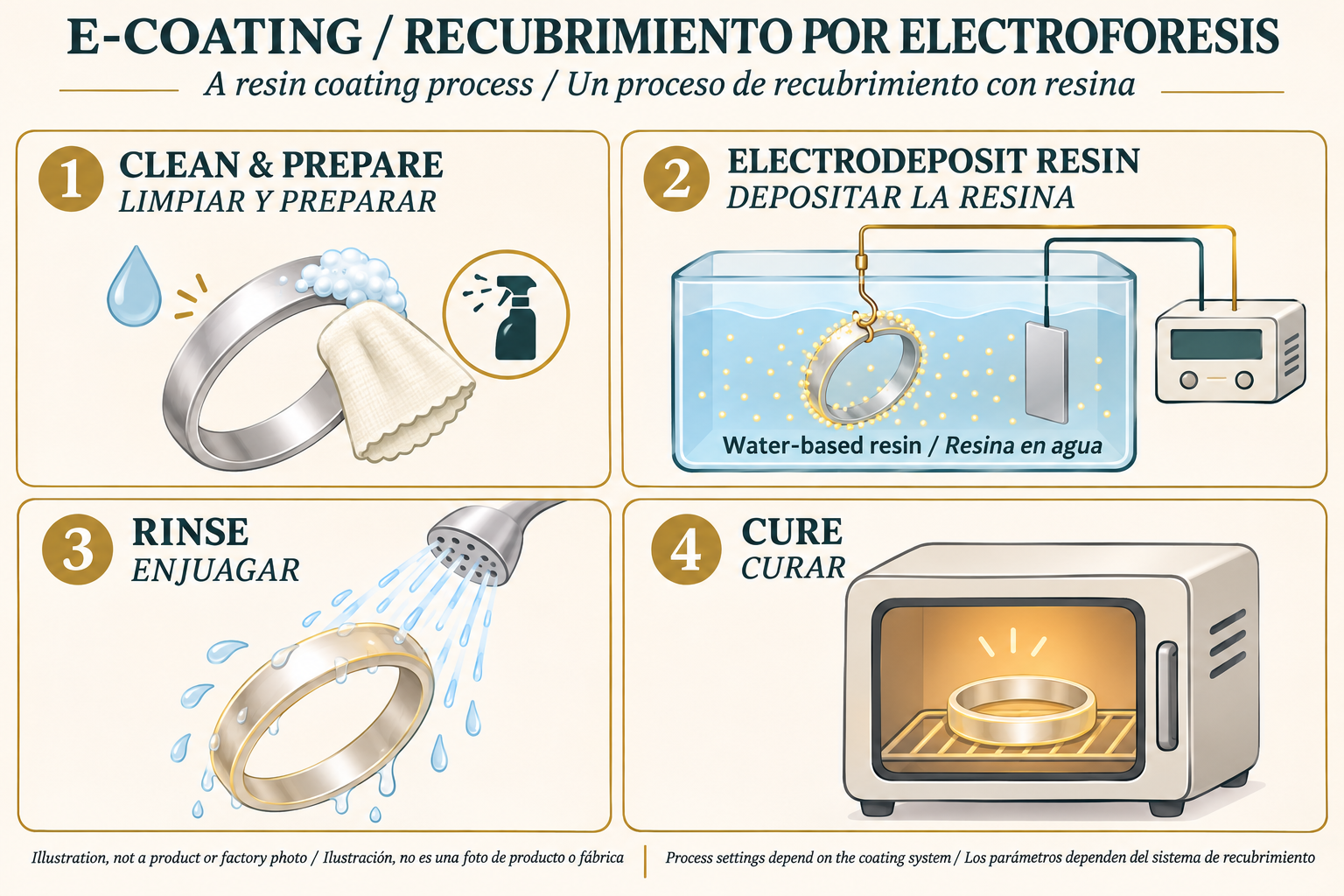
E-Coating Process
The main stages are surface preparation, deposition, rinsing and curing. Each affects the final appearance and adhesion. A clean-looking piece is not enough on its own: the coating needs a suitable surface, controlled application and the cure specified for that particular system.
Surface Preparation
Surface preparation removes oils, polishing compounds and other residues before coating. Cleaning and rinsing must suit the metal and any existing plating. The condition of the surface matters because a coating will not correct scratches, pores or contamination beneath it. Inspect the prepared sample before moving to the coating stage.
Electrophoretic Deposition
The conductive piece is immersed in the coating bath and an applied electrical potential deposits the coating material. Bath chemistry, electrical settings, exposure time and fixture contact all influence the result. Detailed or recessed designs still need inspection; immersion alone does not prove that every area has received an acceptable film.
Curing
After deposition and rinsing, the coating is cured according to its technical instructions. There is no single curing temperature for every jewelry e-coat. Check both temperature and time for the selected formulation, and verify that stones, adhesives, decorative finishes and other components can tolerate the process. Correct curing is important, but it is not a guarantee against all future cracking, peeling or wear.
Advantages of E-Coating for Jewelry
A suitable e-coat can be useful when a design needs an additional protective surface or a particular appearance. Compare the finished sample with the intended use rather than judging the treatment by its name. The following benefits should be evaluated alongside the limits of the chosen system.
Enhanced Durability
A protective film can help reduce surface exposure and delay visible changes, but protection varies with preparation, coating condition and use. Rings and bracelets may experience considerable friction. Ask what testing supports the finish and inspect high-contact areas rather than treating e-coating as a scratch-proof or waterproof guarantee.
Comprehensive Coverage for Intricate Designs
Electrodeposition can be useful for shaped metal parts, yet fixture contact, recesses and surface porosity still need attention. Inspect edges, joints and contact points on a representative sample. A visually even finish is a useful check, but it does not by itself establish the coating thickness or long-term performance.
Environmental Considerations
A water-based coating should not automatically be described as harmless or sustainable. Assess the actual chemistry, pretreatment, energy use and waste handling. Coating solutions and curing fumes require the precautions specified by the supplier; environmental claims need evidence for the process being used, not a blanket comparison with every other finish.
Cost-Effective Long-Term Solution
Compare the total finishing cost with the requirements of the design. Preparation, application, inspection and possible rework all matter. E-coating and metal plating serve different purposes and can be used together, so a universal claim that one is always cheaper or longer-lasting is not a useful purchasing rule.
Things to Consider Before You E-Coat Your Jewelry
When evaluating e-coating for jewelry, it is essential to consider several key factors to guide your decision-making. While this process enhances durability and extends the lifespan of pieces, it is important to note that it is not a universal solution. Please find below a detailed list of the most important factors to consider.
Metal Compatibility
Compatibility depends on the base metal, any existing finish and the selected coating formulation. Do not assume that all e-coats are nano-ceramic systems or that one treatment suits every alloy. Request a trial on the actual material and finish, then review adhesion and appearance before approving production.
Design Intricacies
Consider the whole assembly, including stones, adhesives, hinges and decorative inserts. Components that cannot tolerate the preparation or cure may need a different assembly sequence or finish. Discuss this with the coating provider before processing an assembled piece; do not assume that every enamel or every gemstone responds in the same way.
Color & Finish
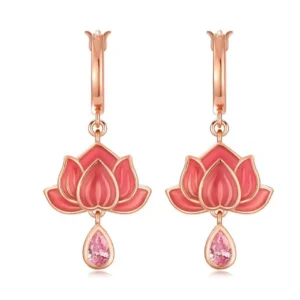
A clear or colored coating can change the apparent tone, gloss or feel of a surface. Review an actual finished sample under consistent lighting, especially when matching several components. Agree the intended appearance before production and ask how rework would be handled, because removing a coating can also affect underlying finishes.
Cost Economics
The cost of e-coating is dependent on several factors, including the complexity of the design, the type of metal being coated, and the required level of polishing. Simple pieces generally incur less expense, while intricate designs require a greater investment in labor. A thorough pre-treatment process is paramount to ensure the absence of flaws beneath the coating.
How Long Does E-Coating Last?
There is no dependable universal lifespan for e-coated jewelry. The coating system, preparation, thickness, curing, wear pattern and care all affect how it performs. A fixed promise of two to five years is not justified without relevant testing and defined conditions. For a specific order, ask what has been tested and how the finish should be maintained; keep jewelry away from abrasive cleaning and follow the care instructions supplied for the complete piece.
E-Coating, Enameling, PVD, and Plating: What Are the Differences?
These processes should be compared by what they deposit and the appearance they create, not by an assumed lifespan ranking. E-coating adds a resin-based film; electroplating deposits metal; PVD deposits material in a vacuum. Enameling may refer to fired vitreous enamel or to other decorative products sold as cold enamel, so clarify the actual material and process. Our gold-finish guide explains the distinction between gold finishes in more detail.
| Process | What it adds | What to confirm |
| E-coating | Resin-based protective or decorative film | Coating formulation, preparation, curing and care |
| Vitreous enamel | Fired glass-based decorative layer | Firing compatibility and design requirements |
| PVD | Vacuum-deposited coating | Coating composition, substrate and tested performance |
| Electroplating | Electrodeposited metal layer | Metal, layer thickness, underlayers and care |
The Takeaway
A good finish starts with the design, the base metal and a clear idea of how the jewelry will be worn. Use a representative sample to review appearance, ask for the selected coating and care requirements, and confirm any performance claim before repeating it to customers. To discuss a finish for your design, contact Fine Chic Jewelry with the material, reference images and intended use.