Choosing a ring combines personal style with a practical fit check. Whether you are shopping for yourself, planning a gift or developing a collection, measure the intended finger and confirm the sizing system before choosing a size. Stone carat weight is a separate decision from ring size. This guide explains the measurements, common sizing questions and how to compare stone options without relying on an assumed average.
| Inner diameter (mm) | Approximate inner circumference (mm) |
|---|---|
| 15.0 | 47.1 |
| 16.0 | 50.3 |
| 17.0 | 53.4 |
| 18.0 | 56.5 |
| 19.0 | 59.7 |
| 20.0 | 62.8 |
What is Ring Size?
Ring size describes the internal fit of a ring. It can be related to inner circumference or inner diameter: circumference is the distance around the inside of the ring, while diameter is the distance across its opening through the center. Neither measurement is the width of the metal band. Band width and internal profile can affect how the same nominal size feels.
Interestingly, sizing standards aren’t universal – they vary significantly across regions and measurement systems:
- Circumference: Measured in millimeters (mm) or inches.
- Diameter: The inside diameter, usually measured in millimeters. European size numbers commonly relate to inner circumference, not diameter.
- Sizing Numbers: Systems such as US, UK, European and Japanese sizing use different labels. Always state the system and check the maker’s conversion chart.
How to Measure Ring Size?
You can estimate a size at home or have a jeweler measure it. Finger size can change with temperature and time of day, so repeat the measurement under normal conditions rather than immediately after exercise or when hands are unusually hot or cold. Measure the actual finger on the intended hand; the corresponding finger on the other hand may differ.
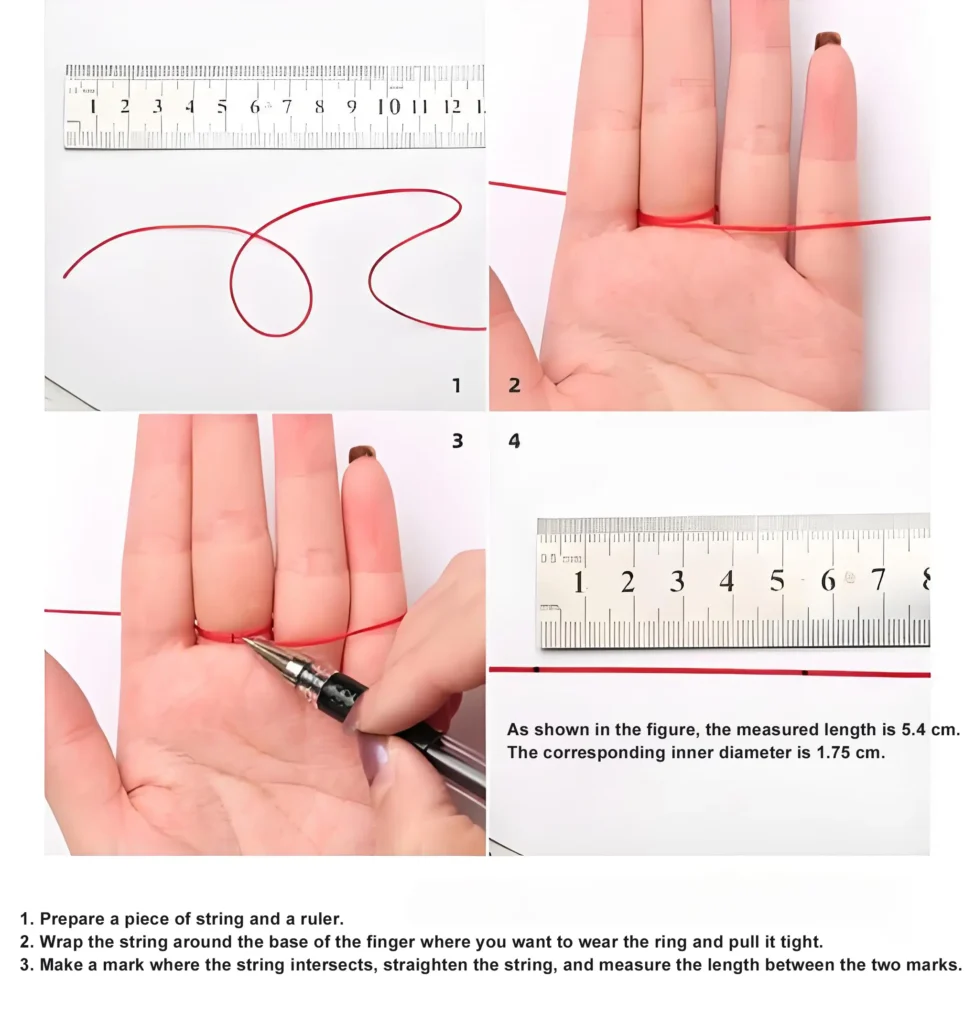
Measure at Home
Tools: A narrow, non-stretch paper strip and a millimeter ruler can provide an estimate. A suitable ring sizer is preferable for confirming the final fit; string can stretch or tighten unevenly.
Steps:
- Wrap the paper strip comfortably around the base of the intended finger without pulling it tight.
- Mark the overlap.
- Measure the marked length in millimeters, repeat the measurement and compare it with the maker’s sizing chart.
Critical tips: Check both the base of the finger and the knuckle. The ring needs to pass over the knuckle while remaining comfortable and reasonably secure at the base. Do not automatically add a fixed size; confirm the fit with a ring sizer of similar width and profile to the intended ring.
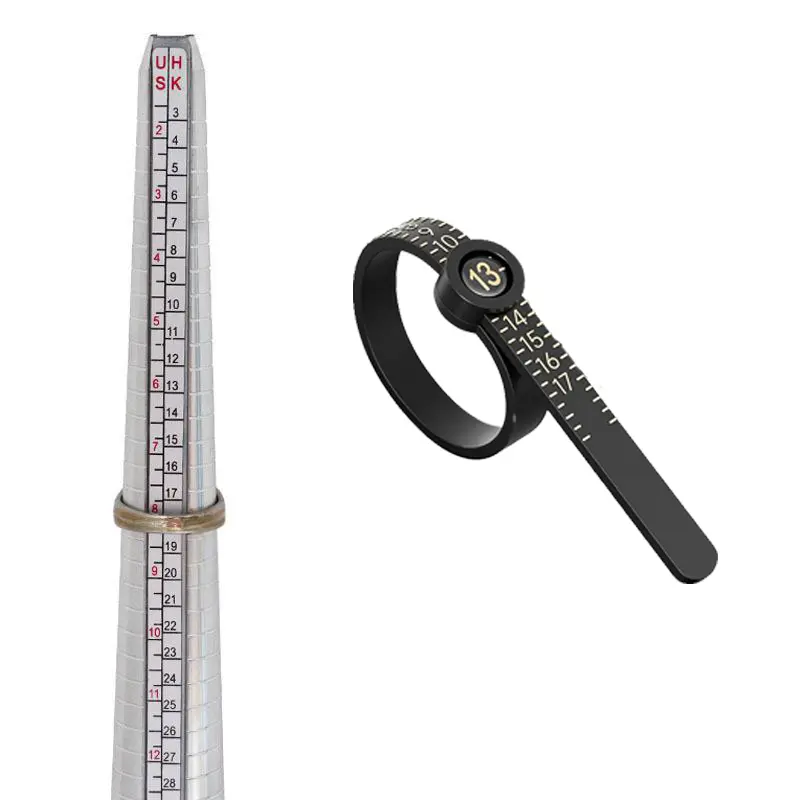
Professional Sizing
Jewelers use graduated ring sizers and measuring tools to assess fit. Try a sizer similar in width to the intended design and discuss whether the ring can be resized. This is particularly useful for an engagement ring, a wide band or a design with stones around the full circumference. Confirm the finished size on the order rather than relying only on a home measurement.
Most Common Ring Size for Women
There is no single women’s ring size that can be treated as a reliable fit for an individual. A retailer’s most frequently sold size reflects its own customers, ring designs and market; it is not a universal population average. For a gift, use a well-fitting ring worn on the intended finger or arrange a fitting. For a collection, use your own size-level sales and return records to plan the size range rather than assuming a size from nationality.
Average Male Ring Size
The same principle applies to men’s rings: occupation or body type does not determine a ring size. Wider bands may feel different from narrow ones, but there is no fixed half-size adjustment that works for every design. Try a comparable band and check comfort while bending the finger and passing the ring over the knuckle. For production, confirm the sizing system, band width and internal profile together.
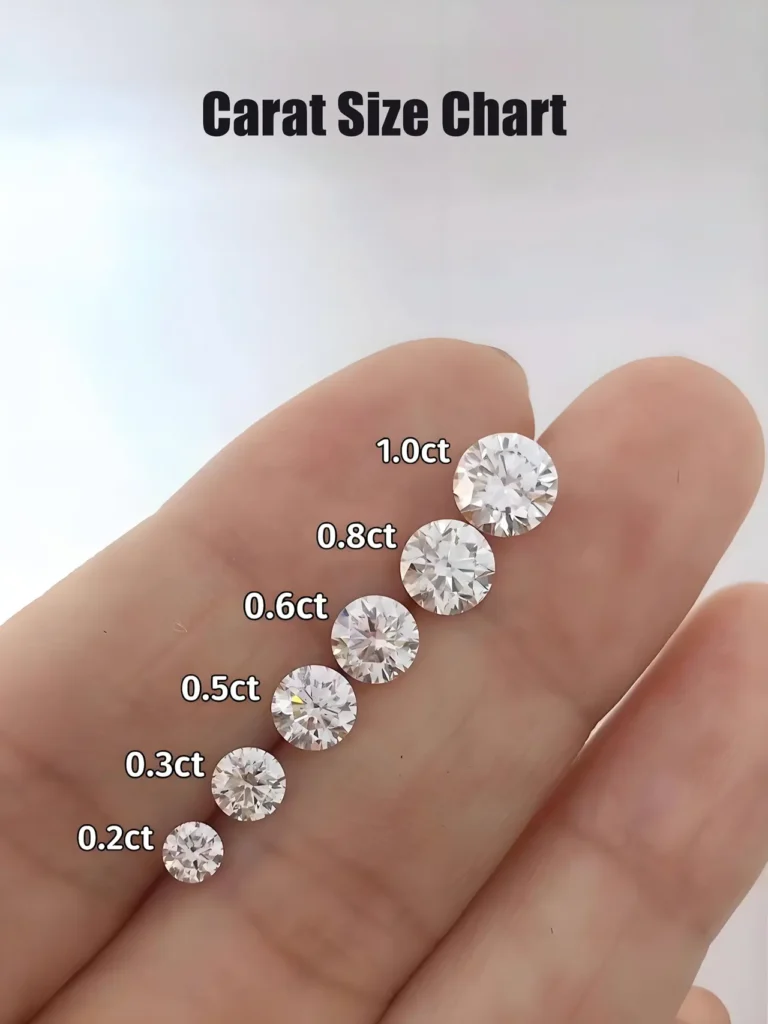
Average Carat Size for Engagement Rings
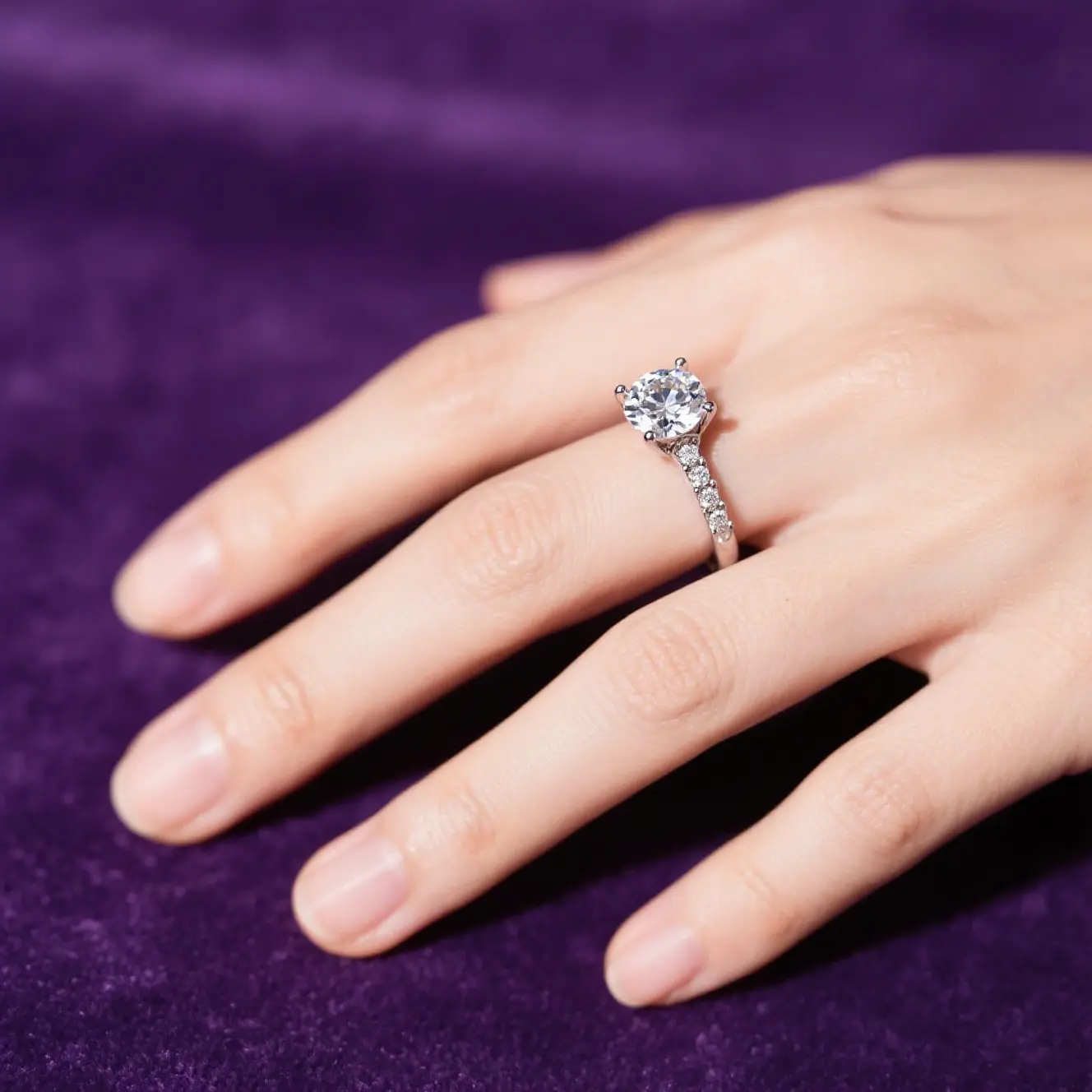
Engagement ring preferences vary by customer, budget and design; there is no worldwide average suitable for selecting an individual ring. Carat measures gemstone weight, not face-up diameter: one metric carat is 0.2 grams. Cut, shape and proportions affect how large a stone appears, and materials of different density can have different weights at similar dimensions. Use the stone’s millimeter measurements as well as its carat weight when reviewing a design.
A diamond just below a popular weight threshold can cost less than a comparable stone above it, but a fixed saving such as 30% cannot be assumed. Compare actual quotations for stones with similar origin, cut, color, clarity and grading documentation. A small weight difference may be hard to see, while differences in proportions and setting can change the visual effect.
The Takeaway
Choose the ring’s fit and the stone’s appearance as two related but separate decisions. A halo setting changes the overall design; it does not change the center stone’s carat weight. Confirm the finger size, band profile, stone dimensions and setting on the sample before approving a custom piece.
Consult our jewelers for custom designs, ensuring perfect proportion and comfort. For bespoke solutions, explore our ring collections or utilize our custom design service to achieve both ideal fit and personal significance.